
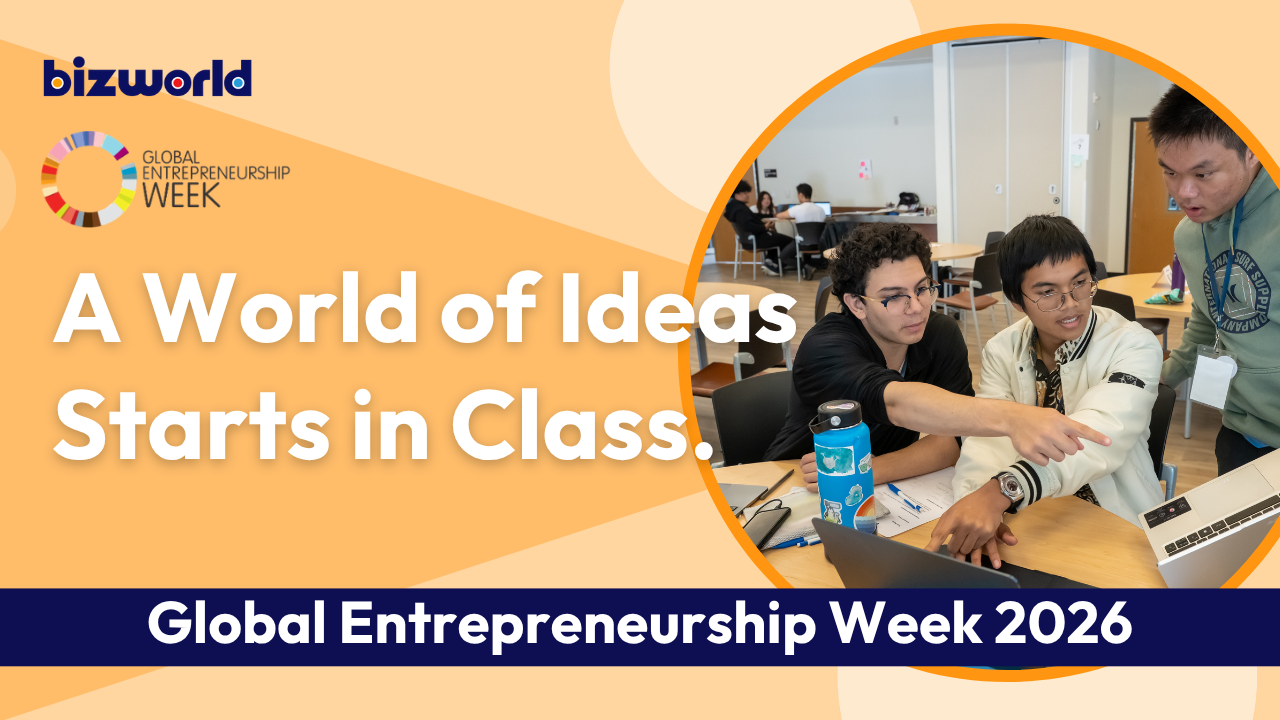

Ask your students what they would change about their school day, and they might tell you the lunch line takes too long, nobody knows when clubs meet, or there’s nowhere to put a wet umbrella. Then ask one more question. Who else has this problem, and how could we find out what would help them?
That’s a simple way to bring Global Entrepreneurship Week into your classroom, on November 16–22, 2026. Students can start with a problem they already know, talk to someone who experiences it, and decide what they might try to fix it.
Why teach entrepreneurship early?
Communities depend on people who recognize a need and find a way to meet it. The World Bank estimates that micro, small, and medium-sized enterprises account for about 90% of businesses and more than half of employment worldwide. In the classroom, students can practice the thinking behind those businesses on a scale that makes sense to them. Who is this for? What would make it useful? What might we change after someone tries it?
Give students room to answer those questions and they may take the idea somewhere you didn’t expect. As Wakana Fukuda of BizWorld Japan put it, “They come up with answers that adults would never think of.”
What that looks like in a sixth-grade classroom
At Parkway Academy in California, BizWorld’s 2026 Educator of the Year, Emily Scheitlin, asks her sixth graders to think about what their schoolmates would actually want to buy. The students choose a product, figure out what it costs to make, and decide what to charge. “It’s all them,” Scheitlin says.
A question like, What should we charge? gives students a reason to use their math, think about what someone else would pay, and explain their decision to a teammate. Scheitlin has seen that thinking carry over into school clubs. When students talk about selling snacks to raise money for field trips, they now ask how much profit they could make and work through the numbers.
Different classrooms, the same chance to try
Through its programs and international network, BizWorld has reached more than 900,000 young people in over 100 countries. Local partners in about a dozen countries world-wide make the experience relevant to their own schools and communities. The ideas students come up with may look different in Japan than in California, but in both places, students get to make decisions about something they care about.
This Global Entrepreneurship Week, try asking your students to notice one problem at school and talk to one person it affects. Then ask them what they’d try first to solve this problem. You might be surprised by what they notice and what they decide to do about it.