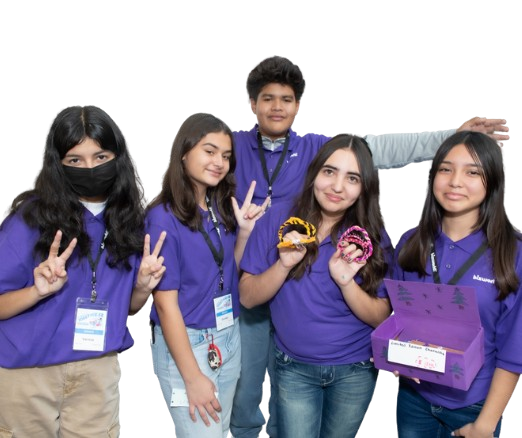
Tag: BizWorld

News & PR
Leane Pottas

From Pharmacy Student to Funded Founder: How Sakhi Patel Built CuraVoice Through BizWorld’s YES! Program

When Sakhi started building CuraVoice at the end of 2024, she wasn’t thinking about paid contracts, joining BizWorld’s YES! Program, or pitching her new MedTech startup at conferences. She was a third-year pharmacy student who had noticed a gap – healthcare schools teach students what to say to patients, but rarely how to say it. That observation became a platform. CuraVoice lets healthcare students practice real patient conversations with a custom AI voice agent, receive graded feedback and build the communication confidence that clinical training often skips. Today, the platform has over 550 users across more than 100 universities worldwide, and a paid workforce training contract with an independent pharmacy. Getting to this point though, required more than a good idea. Finding the Right Room Sakhi heard about BizWorld’s Young Entrepreneur Success (YES!) Program through a LinkedIn post from a previous cohort winner. At 21, she was still learning the language of startups – terms like customer acquisition cost, and lifetime value were new territory – and most accelerators she encountered weren’t built with students in mind. “A lot of big accelerators are not always built with a student in mind,” she explained how BizWorld’s YES! Program is differnt. “Just being in a space where you also see other young people like yourself is really motivating.” What drew her in wasn’t just the curriculum, it was the environment, one where not knowing something wasn’t a liability, and where every participant was just like her, figuring things out in real time. Treated Like a Founder, Not a Student Founder One of the things Sakhi kept coming back to was how BizWorld reframes the idea of a student entrepreneur. There’s an unspoken assumption in many programs that a student led project has an expiration date; that it ends when school does. BizWorld pushes back on that idea. Her mentor made it clear early on: don’t let the momentum stall on your ideas just because you’re still in class. The focus wasn’t on surviving the semester, it was on building something that would still be running in five or ten years. “That’s what differentiates this program,” Sakhi said. “It forces you to think long term.” A Safe Space to Get It Wrong One thing the startup world doesn’t always advertise is how much trial and error actually goes into building something. For young founders especially, that process can feel high-stakes – particularly in rooms full of people with decades more experience. BizWorld is deliberately different. The YES! Program is built around the idea that getting things wrong is part of the process, not a disqualifier. Sakhi described it plainly, “What better place to fail than in a very supportive environment surrounded by other young entrepreneurs that are all just trying?” That culture of a business accelerator program matters more than you realize. It means founders show up willing to test ideas, ask basic questions and change direction without it feeling like a setback. Sakhi herself didn’t expect CuraVoice to pivot into workforce training, that direction emerged through conversations, feedback and the willingness to keep questioning early assumptions. But BizWorld’s support doesn’t stop at encouragement. What makes the program genuinely distinctive is what happens after the final Demo Day pitch event where participants have the chance to take home $30,000 in funding. Winners aren’t handed a cheque and sent on their way, they’re brought back for structured six and twelve-month check-ins to report on how their funding is actually being used. It’s accountability built into the model, and it sends a clear message: this isn’t a school prize, it’s an investment in a real business! “BizWorld wants you to tell them, ‘Hey, in six months I said I would do this, and now I did it,’” Sakhi said. “That’s where treating us like real founders actually comes in.” Demo Day: A Different Kind of Pitch Competition The YES! Program’s pitch even Demo Day, isn’t structured like a typical pitch contest. There’s no fixed first, second or third place winners. Founders make their own funding ask, explain exactly what they’ll use the money for and the judges decide from there. This year, five companies walked away with funding between $2,000 to $10,000. But would you believe it that at first, Sakhi almost didn’t make it to Demo Day at all. Due to the quality of her pitch at the end of the YES Program’s 10-week accelerator, she wasn’t selected in the initial round to proceed to the finals at Demo Day, but a wildcard community vote – which she won – put her back in the room. She went on to deliver a new pitch, answer the judges’ questions with confidence and expertise, and walked away as the top-funded company, taking home $10,000. “I was not counting on being the absolute winner,” she said. “Seeing people really rally for me was good enough in and of itself.” So what will this new found investment be sued for? The funds are going toward cloud infrastructure to support CuraVoice’s growing data needs, conference attendance to reach pharmacy owners and hiring managers, and a targeted marketing push. BizWorld also builds in six and twelve-month check-ins to hold winners accountable – another signal that this is real investment, not a prize cheque. What’s Next for CuraVoice CuraVoice is expanding beyond the student market into workforce training, giving employers a credentialing layer to assess how well candidates can actually communicate with patients, not just what they know on paper. It’s a pivot that came directly from conversations at a pharmacy conference, where owners and hiring managers asked for exactly that tool. For Sakhi, the BizWorld experience didn’t end at Demo Day. The connections, mentorship and community have continued, which she says is exactly what young entrepreneurs need most. “There are spaces where you will feel supported,” she said. “but if you don’t try, you’ll never find them.” Support the Next Generation of Founders Many people are often surprised by the fact that the YES! Business Accelerator program is free

Read More »
education
Leane Pottas

What Taiwan’s Top Students Are Still Missing | BizWorld × Taiwan

One of the most important things BizWorld teaches young people is not a business framework or a pitch structure. It is independent thinking – the ability to question, challenge, and reason through problems on their own terms. According to Roick Feng, founder of Hohoka and BizWorld’s new Taiwan partnership, independent thinking is also the skill that most school systems are failing to build. “They are masters at answering other people’s questions,” he said of Taiwan’s students, “but not at solving their own problems.” That gap between academic performance and real-world capability, sits at the centre of what BizWorld’s entrepreneurship education is designed to close. Feeling the Problem Before Solving It Most education systems teach students to process problems that have already been defined for them. The question is on the paper. The method is in the textbook. The answer exists somewhere, and the task is to find it. BizWorld’s approach starts somewhere else entirely. “Through entrepreneurship, you can feel other people’s pain points and find the solution,” said Roick. Before a young person can pursue any venture truly worth building, they have to first develop the capacity to notice what is wrong, to sit with a problem long enough to understand it from someone else’s perspective. That is empathy as a practical skill. And it is one of the things a 2025 global analysis of project-based learning research, mapping over 2,200 peer-reviewed studies over a decade period, points to consistently as a differentiator between students who can perform academically and students who can actually create something. Why Independent Thinking Is the Real Outcome The deeper skill being built through BizWorld’s entrepreneurship curriculum is the power of independence of thought. The ability to receive information and to interrogate it, before accepting it. “Challenging all the ideas and challenging all the impossibilities or the pain points you’re facing; that’s exactly what the entrepreneurship program wants to bring you,” Roick says. “And that’s why you learn to think independently.” It is also the exact skill that protects people from being misled. In a world where information – real and fabricated – arrives faster than it can be verified, the person who pauses to ask “is this actually true?” has a significant advantage over the person who was only ever taught to absorb and repeat. BizWorld builds that pause. It builds the instinct to ask why, to stress-test assumptions, and to reach conclusions through your own reasoning rather than someone else’s. The Skills That Are Uniquely Human What makes this urgent right now is not just the school system, it is everything outside of it. “AI can replace knowledge, but it cannot replace entrepreneurship,” Roick says. “Skills like human empathy, making tough calls in deep ambiguity, and having grit to bounce back from failures; they’re very uniquely human. So if we don’t teach this now, we’re failing our kids.” That framing shifts the conversation. Entrepreneurship education is not a supplement to academic learning. It is preparation for a world where retrieving information is trivially easy and where the value sits entirely in what you do with it. Why Hohoka Chose BizWorld | BizWorld x Taiwan International Partnership Hohoka had already built its own entrepreneurship and financial literacy programs in Taiwan, earning recognition from both public and private sectors before the BizWorld partnership came into the picture. Thus, the decision to bring BizWorld in was not about filling a gap, it was about connecting Taiwan’s young people to something larger. “I’ve been researching and looking at BizWorld’s programs for a long time,” Roick explains. “I believe we share the same values and we care about the same issues. The most important addition to us that BizWorld brings is connecting Taiwan’s kids to the world. BizWorld’s programs and infrastructure provides exactly the key to that.” Taiwan produces outstanding engineers. It is one of the most technically capable workforces on the planet. But Roick saw clearly what the next step required. “That’s good, but that’s not good enough. We want to cultivate the visionary business leaders who can actually lead those engineers to change the world. That’s one thing I believe BizWorld can bring to Taiwan.” BizWorld’s curriculum provided the international framework, the global network, and the project-based structure that HohoKa wanted to bring to Taiwanese classrooms. The partnership was built on shared conviction: that entrepreneurship is a life skill, and that the right time to teach it is now. If you’re an educator, school leader, or organisation exploring what it would take to bring entrepreneurship education to young people in your country, BizWorld’s international partnership program is a good place to start. Learn more about joining us as a BizWorld International Partner now, and follow along with Hohoka and their work bringing entrepreneurship education to Taiwan.

Read More »
Draper Innovation Index News
Leane Pottas

Youth Entrepreneurship in Japan: Potential in a Cautious Culture

The Draper Innovation Index (DII) ranks Japan 17th in the world for innovation and entrepreneurship – a top-tier score reflecting strong performance across government quality, economic environment, and social sub-indices. By every structural measure, Japan should be one of the world’s most active startup nations. And yet, Japan has a well-documented reputation for caution when it comes to entrepreneurship. One commentator famously described it as “a country where young people don’t start businesses.” The data backs this up and understanding why, matters for anyone working in entrepreneurship education. The Numbers Tell a Clear Story Compared to global averages, Japan’s entrepreneurial participation is strikingly low: These numbers do not reflect a lack of capability. Japan is one of the most educated, innovative, and technically skilled nations on earth. What they reflect is culture, and culture can change. The Demographic Challenge Japan’s entrepreneurial scene is also shaped by a powerful demographic reality: it is one of the oldest demographic countries in the world, with a median age of 49.5. Over the last 30 years, the average age of a new entrepreneur in Japan has increased. The percentage of founders under 40 has been decreasing, while the share of those over 50 has been rising. This decline in youth entrepreneurship reflects the country’s broader aging population – a challenge affecting all aspects of its society and economy. Japan’s Strengths Are Significant Despite the cultural caution, Japan possesses immense underlying strengths that could fuel a new generation of entrepreneurs if properly activated: What Could Change This Japan has all the ingredients needed to produce a new generation of entrepreneurs. The challenge is putting them all together: Japan does not lack the talent, the infrastructure, or the ideas. What it needs is a cultural shift that makes entrepreneurship feel like a viable, respected, and exciting path for young people, the same shift that produced Sony, Nintendo, and Pokémon in an earlier generation. The foundation is already there. The next wave just needs to be encouraged to build on it. Explore Japan’s complete innovation ranking and the full Draper Innovation Index at https://bizworld.org/index/

Read More »
Draper Innovation Index News
Leane Pottas

Youth Entrepreneurship in Argentina: Passion in the Face of Challenges

The Draper Innovation Index (DII) ranks countries around the world on how easy it is for people to start and grow new businesses. Argentina sits in a challenging position on the DII due to long-term economic instability, but the country tells a far more complex story than its ranking suggests. It is one of extraordinary entrepreneurial spirit, particularly among its young people. Under the Javier Milei administration, there are now real signs of recovery. Hyperinflation has fallen to more normal levels and economic growth has significantly increased, making this an important moment to pay attention to what is happening on the ground. A Nation of Aspiring Entrepreneurs Despite the economic backdrop, the entrepreneurial spirit among Argentina’s youth is exceptionally strong. The numbers speak for themselves: This level of ambition, sustained through economic crisis, is remarkable. Entrepreneurship in Argentina is not a trend, it is a cultural response to adversity. So why does Argentina not rank higher on our global innovation rankings? The Challenges That Remain Despite the enthusiasm, structural barriers are holding many young Argentinian entrepreneurs back: Education: The Missing Link For Argentina to convert aspiration into action, education needs urgent attention. Recent trends show a concerning decline in student performance in core subjects that are foundational for running a business: Investing in entrepreneurship-specific education and durable skills could be a powerful motivator, directly connecting classroom learning to the ambitious goals of so many young Argentinians. Where Argentina Shines on the DII Despite its overall ranking, Argentina has standout performance in key DII categories: Argentina’s story is one of resilience. Its youth face enormous economic challenges but respond with an overwhelming desire to build something. If the economy continues to stabilize and investment in education follows, the entrepreneurial energy already present in its young people could become the engine that drives the country forward. Supporting young Argentine entrepreneurs is not just the right thing to do – it may be the most important economic investment Argentina can make. Explore the full Draper Innovation Index at https://bizworld.org/index/

Read More »
education
Leane Pottas

What Is Compass? BizWorld’s Self-Paced Entrepreneurship Program for Ages 16-22

Most schools teach young people facts and figures. Very few teach them how to think or how to build something that could change their future. That’s the gap that BizWorld’s newest program Compass, was designed to close. BizWorld’s new self-paced entrepreneurship program for young entrepreneurs takes students from raw passion, all the way through to a recorded business pitch in seven structured steps, on their own schedule, with no classroom required. You’ve Got the Drive. Now What? Most young people with a business idea (or idea of a problem that needs solving) hit the same wall. They’ve watched the YouTube videos. They’ve done the Googling. They still don’t know the actual next step. Compass meets them exactly there. Ayesha Madni, Director of Education at BizWorld, describes it simply: it’s for the young person having, “this really strong inner feeling that I want to do something about this but im not sure how to get going.” Whether that’s a problem they want to solve in their community, something they love doing and want to turn into a business, or simply a growing curiosity about entrepreneurship – Compass is built for that moment. What Is Compass? Compass is a 7-part, on-demand entrepreneurship program for young entrepreneurs aged 16–22. It’s self-paced, one-time payment, no subscription required, and designed to feel more like an engaging workshop than just traditional boring video content. What will you learn in the 7-part program? By the end, students don’t just have knowledge – they have a real output. A business pitch they can share with friends and family, post on social media, or use to apply for an accelerator like BizWorld’s YES! Program. Compass is More Than a Business Course What makes Compass different from the thousands of free resources already online isn’t just the content – it’s the sequence. Ayesha is deliberate about this: “You have to first unlock the mindset that you can do something new and unique, and then it takes you through step by step exactly what you need to hear and how to do it.” The skills built inside Compass go well beyond entrepreneurship. Goal setting, time management, creative problem-solving, leadership and the ability to pitch an idea confidently – these are life skills. As Ayesha puts it, “knowing how to communicate and pitch an idea applies whether you’re presenting at work, interviewing for a job, applying to university or speaking at your graduation.” Who Is Compass For? Compass was originally developed for students ages 16-22, but it has quickly attracted interest from homeschooling parents and educators looking to bring entrepreneurship into their classrooms. The self-paced, flexible format makes it easy to incorporate however works best for you. If you’re a student sitting on an idea, if you’ve always been interested in the idea of being an entrepreneur, or you even just have a strong feeling that you want to create something new, Compass is built for you. If you’re a parent or educator who wants to give a young person the mindset and skills to back themselves, Compass delivers that too. A Direct Path to YES! – BizWorld’s Young Entrepreneur Success Business Accelerator Program Compass sits intentionally just before BizWorld’s YES! Program in the BizWorld Trajectory of Programs. Where YES! is BizWorld’s accelerator for young entrepreneurial-minded individuals who are ready to build and pitch at a serious level, Compass is the on-ramp – the place where the idea gets refined and the young person gets ready to start their journey into entrepreneurship. The goal, as Ayesha describes it, is clear: complete Compass, develop your pitch, and take that idea forward into YES! and beyond. Start Now – Launch Offer Available Compass is available now for a limited time, for a one-time payment of $29.50 with the launch discount code COMPASS50 (regular price $59.00). No subscription, no meetings, start immediately on your own time. If you’ve been waiting for the right moment – Ayesha’s answer is straightforward: “There’s never the perfect time for anything. We must choose to create that time.” Today is the perfect day to start. Choose it! Start Compass now. Want to take your idea even further? Learn about BizWorld’s YES! Program or support young entrepreneurs building the next generation of businesses.

Read More »
Educational Blog
Leane Pottas

What Is the BizWorld Innovation Sprint? A Fast-Paced Idea-A-Thon for Young Entrepreneurs

If you’ve ever wondered what happens when you put a room full of young people, a real community problem, and 12 hours on the clock together – the BizWorld Innovation Sprint is your answer! Launched as a brand-new program by the team behind the YES! (Young Entrepreneur Success) business accelerator program, the Innovation Sprint is quickly becoming one of the most exciting ways for young people to hone their entrepreneurial chops. Here’s everything you need to know. What Is the BizWorld Innovation Sprint? The Innovation Sprint is a two-day, in-person hack-a-thon style event where students aged roughly 16 to 22 come together to identify a community problem and build a viable business idea around solving it. Think of it as a creative pressure cooker: teams of two to four work side by side, ideate, build, and pitch their concepts to a panel of judges – all within a single weekend. It’s hosted by BizWorld, the non-profit that has been teaching life skills through entrepreneurship for almost 30 years. Innovation Sprint vs. Hackathon: What’s the Difference? The Innovation Sprint borrows its fast-paced, collaborative format from the classic hackathon – but with a key twist. Where a hackathon usually centers on coding and tech, the Innovation Sprint is open to any kind of business idea. That includes physical products, community services, charitable ventures, and yes, tech-enabled solutions too. BizWorld calls it an “Idea-A-Thon” – same energy as a hackathon, with none of the boundaries. How Does the Innovation Sprint Work? The format is intentionally simple, leaving plenty of room for creativity: Friday evening – Ideation: Students gather over pizza, brainstorm problems they see in their communities, and group ideas into themes like food scarcity, senior care, animal welfare, and homelessness to name a few. By the end of the evening, teams form around shared interests and walk away with a clearly defined problem, that they’re excited to solve come stage two of the event. Saturday – Build and Pitch: Teams spend the day developing a solution and working through the business side: Who’s the target audience? How will we generate revenue? Why does this matter? How is it sustainable? This all happens while our amazing mentor volunteers, business professionals, university lecturers, entrepreneurs and engineers, roam the room asking the hard questions to guide our participants. The day wraps with a one-minute pitch in front of judges, followed by Q&A. No long slide decks, no fluff. Just a clear problem, a clear solution, and a clear case for why it could work. A Glimpse of What’s Possible The first ever Innovation Sprint took place in May 2026 in the Bay Area of California, hosted at Mission College. The winning team, BestBox, built a concept for a smart medication-dispensing device – complete with a home unit, a portable travel version, and behavioral reminders for users who need to take doses outside the standard morning/afternoon/night cycle. They even mocked up the app interface using generative AI tools. All in 12 hours. Why the Innovation Sprint Matters The point isn’t to produce the next billion-dollar start-up overnight. It’s to give young people something far more valuable: the belief that they can have an idea, build on it, and put it out into the world. “We’re so proud of how the Innovation Sprint aligns with our mission here at BizWorld, to equip future generations with entrepreneurial life skills to unlock their potential and create economic opportunity.” The Sprint also creates real, in-person community, something virtual programs struggle to replicate. Students meet like-minded peers, work with mentors, and gain confidence that’s hard to teach in a classroom. One participant summed it up perfectly in the post-event survey: “I gained the belief in myself that I can be an entrepreneur if that’s what I want to be.” How to Get Involved The next Innovation Sprint is already in the works, with BizWorld looking for schools, colleges and community partners to bring the event to new regions. Whether you’re a student keen to participate, a mentor with experience to share, an educator looking to host your own version of the sprint, or a donor who wants to back the next generation of entrepreneurs, we’d love for you to get involved. Submit your email below for more information about the BizWorld Innovation Sprint.

Read More »
Draper Innovation Index News
David Solis

Draper Innovation Index US May 2026

BizWorld Updates Monthly Draper Innovation Index U.S.States Compete to Land in Top Ten of Best Places to Launch a Startup Colorado, North Carolina, and Georgia Climb DII US Top 10Texas, Wyoming, and Arizona DropMissouri Breaks into DII US Top 20, Alaska Rises, North Dakota FallsCalifornia, New York, and Massachusetts SteadyOhio, Colorado, Delaware, and Wisconsin Post Largest GainsMontana, Oklahoma, and Wyoming See Largest Declines San Mateo, California – BizWorld announces the May 2026 update to the Draper Innovation Index U.S. (DII US), which evaluates each state’s innovation environment and entrepreneurship climate. Published monthly since 2021, the DII US provides the most well-rounded, up-to-date ranking of entrepreneurial locations, reflecting both traditional and emerging economic metrics, from taxes and regulations to venture capital investment, cryptocurrency friendliness, and blockchain investment trends. “As always, new business formation (or the lack thereof) was a major factor this month,” said BizWorld Founder Tim Draper. “While states can’t directly create new entrepreneurs, one of the levers they can pull is the funding of entrepreneurial education. Young people have started some of the most iconic companies: think Steve Jobs and Apple, Walt Disney and his studio. The leading indicator of a state’s future economic competitiveness is the entrepreneurial mindset of its youth. Giving young people the tools and knowledge necessary to start their own businesses should be a priority for every state.  That is exactly the critical infrastructure BizWorld is building across the country – and globe.” Top Takeaways from the DII US April 2026 Update Key Risers: Colorado, North Carolina, Georgia, Ohio, Colorado, DelawareKey Fallers: Wyoming, Arizona, Montana, Oklahoma “The shifting landscape of our DII US Top Ten proves that no state has a permanent monopoly on innovation. Entrepreneurs are highly mobile, and they will naturally migrate to the environments that offer the most opportunity,” said BizWorld Chief Economic Advisor Dr. Wallace Walrod. “The states that are truly pulling ahead in our rankings are those embracing the future of finance, specifically cryptocurrency and blockchain. Colorado and Ohio are prime examples of how welcoming these new technologies attracts significant venture capital and drives economic momentum.” The DII US will continue to post monthly updates which can be accessed here. About BizWorld BizWorld.org is a global non-profit organization based in San Mateo, CA, whose mission is to equip future generations with entrepreneurial life skills to unlock their potential and create economic opportunity. Founded over 25 years ago by Silicon Valley venture capitalist Tim Draper, BizWorld.org programs teach students real-world 21st century skills and leadership that encourage them to become responsible leaders and entrepreneurs of tomorrow. More than 850,000 students in more than 100 countries have participated in BizWorld programs. https://www.bizworld.org/

Read More »
Draper Innovation Index News
David Solis

Draper Innovation Index Global May 2026

BizWorld Updates Monthly Draper Innovation Index Global Nations Compete to Land in Top Ten of Best Places Globallyto Launch a Startup India, Turkey, Bosnia and Herzegovina, and Qatar Register Largest GainsFinland Falls in DII Global Top 10; Singapore and Netherlands RiseNamibia, Micronesia, and Papua New Guinea See Largest DeclinesChina Sees No Change; Russia Sees Marginal GainGuatemala and Colombia RiseIreland and South Korea Rise in Top 20, New Zealand and Luxembourg Sink San Mateo, California – BizWorld announces its May 2026 update to the Draper Innovation Index Global (DII Global), which evaluates each nation’s ability to develop, support, and retain entrepreneurs, innovators, startups, and investors. First published in 2021, the DII Global provides the most well-rounded and up-to-date look at entrepreneurial environments across the globe. The May 2026 DII Global update reflects the continued global instability stemming from the ongoing conflict in the Middle East. “India was our biggest success story this month, jumping 14 spots in the DII Global rankings. Their unmatched growth in Artificial Intelligence and Machine Learning venture capital proves that AI is the new catalyst for entrepreneurial expansion on the world stage,” said BizWorld Founder Tim Draper. “Securing the largest increase in AI investments this month shows that global investors are highly confident in India’s potential to lead the next generation of tech entrepreneurship. India is the world’s sixth largest economy and has great entrepreneurial potential – its population of more than 1.4 billion, which is now the world’s largest, could support a massive new generation of entrepreneurs.“ Top Takeaways from the DII Global April 2026 Update Key Risers: India, Turkey, Bosnia and Herzegovina, Qatar, Singapore, Netherlands, Guatemala, ColombiaKey Fallers: Finland, Namibia, Micronesia, Papua New Guinea “The data this month makes one thing clear: nations that secure vital Artificial Intelligence and Machine Learning venture capital, such as Singapore and the Netherlands, are actively climbing the ranks. It is the underlying engine driving global entrepreneurial competitiveness,” said BizWorld Economic Advisor Dr. Wallace Walrod. “If you look across the entire DII Global this month, Artificial Intelligence and Machine Learning investments are shifting the balance of power. Whether it is driving massive leaps for nations like India or providing the marginal edge Ireland and South Korea needed to overtake competitors in the top 20, AI capital is the ultimate differentiator in today’s global market. It is evident that nations failing to attract Machine Learning venture capital risk being left behind in the modern innovation race.” The DII Global will release monthly updates to continually reflect the latest developments in global innovation and entrepreneurship, available here. About BizWorld BizWorld.org is a global non-profit organization based in San Mateo, CA, whose mission is to enable youth from all backgrounds to unlock the power of entrepreneurship to create career opportunities, inspire self-reliance, and build confidence that drives economic prosperity globally.     Founded over 25 years ago by Silicon Valley venture capitalist Tim Draper, BizWorld.org programs teach students real-world 21st century skills and leadership that encourage them to become responsible leaders and entrepreneurs of tomorrow. More than 850,000 students in more than 100 countries have participated in BizWorld programs. https://www.bizworld.org/

Read More »
Draper Innovation Index News
David Solis

Draper Innovation Index US April 2026

BizWorld Updates Monthly Draper Innovation Index U.S.States Compete to Land in Top Ten of Best Places to Launch a Startup Florida Retains Top Spot in DII US RankingsNew Hampshire Climbs into 2nd; Utah Slips to 3rdSouth Dakota and Arizona Rise in DII Top 10; Colorado and North Carolina FallCalifornia, New York, and Massachusetts See No ChangeMontana and Alaska Break into DII Top 20; North Dakota ImprovesArizona, Idaho, and Montana Post Largest GainsOklahoma, Ohio, and Nevada See Largest Declines San Mateo, California – BizWorld announces the April 2026 update to the Draper Innovation Index U.S. (DII US), which evaluates each state’s innovation environment and entrepreneurship climate. Published monthly since 2021, the DII US provides the most well-rounded, up-to-date ranking of entrepreneurial locations, reflecting both traditional and emerging economic metrics, from taxes and regulations to venture capital investment, cryptocurrency friendliness, and blockchain investment trends. “While traditional powerhouses like California, New York, and Massachusetts maintained their positions this month, they are no longer the default destinations for startups. The rapid rise of states like Idaho, Montana, and Arizona shows that innovation is truly becoming decentralized across the U.S.” said BizWorld Founder Tim Draper. “In fact, Montana tied for this month’s largest jump. Montana’s impressive leap into the DII US Top 20 is a testament to the power of favorable tax policies. Entrepreneurs are actively migrating to states where their capital is respected, and Montana is clearly reaping those rewards.” Top Takeaways from the DII US April 2026 Update Key Risers: New Hampshire, South Dakota, Arizona, Idaho, MontanaKey Fallers: Utah, Colorado, North Carolina, Oklahoma, Ohio, Nevada “The reshuffling we see in the Top 10, including South Dakota and Arizona’s rise, underscores how sensitive state rankings are to new business formation. Even with strong VC funding, a state must continue fostering grassroots entrepreneurship to stay competitive,” said BizWorld Chief Economic Advisor Dr. Wallace Walrod. “The steep declines we saw this month in Oklahoma, Ohio, and Nevada serve as a cautionary tale. Without consistent new business formation and active adoption of emerging sectors like blockchain, states will quickly lose ground in the DII US.” The DII US will continue to post monthly updates which can be accessed here. About BizWorld BizWorld.org is a global non-profit organization based in San Mateo, CA, whose mission is to equip future generations with entrepreneurial life skills to unlock their potential and create economic opportunity. Founded over 25 years ago by Silicon Valley venture capitalist Tim Draper, BizWorld.org programs teach students real-world 21st century skills and leadership that encourage them to become responsible leaders and entrepreneurs of tomorrow. More than 850,000 students in more than 100 countries have participated in BizWorld programs. https://www.bizworld.org/

Read More »
education
Leane Pottas

The Top 5 AI Tools for Educators in 2026

You don’t need to become an AI expert overnight. That’s the first thing BizWorld’s Director of Education, Dr. Ayesha Madni, wants every educator to hear. Not because AI isn’t worth your time – it absolutely is – but because the pressure to know everything before you start is exactly what stops most teachers from starting at all. Start with one tool, one lesson, and one class you already feel confident teaching. But when you’re ready to explore, here are the tools that actually belong in your classroom. Before anything else: the prompt is everything. A an AI prompt is: a question, command or statement that a person gives to an artificial intelligence model, such as an LLM large language model, to guide it in generating a specific response. The prompt provides the AI with the necessary context or instructions so it can produce output that is relevant to what you are asking or requesting. Every tool on this list is only as powerful as the prompt you bring to it. A weak prompt – “give me feedback on my student’s business idea” – gets you a weak answer. A strong prompt gives AI a role, a context, a task, success criteria, and an academic integrity instruction. Something like: “You are a venture capitalist coaching a 10th-grade student. Provide three strengths, three improvements, and two reflection questions to their business plan pasted below. Coach only – do not complete the work for the student.“ Same question, with two completely different result. Keep that in mind as you explore everything below. The Top 5 AI Tools for Educators in 2026 ChatGPT is the most widely recognized AI tool in the world right now, and for good reason. It’s conversational, flexible, and capable of helping with almost anything – lesson planning, writing feedback, brainstorming, research summaries. It also has an audio input mode, meaning students can speak aloud and receive real-time responses, which opens up powerful possibilities for verbal feedback. Start here if you haven’t started using any AI yet. 2) Claude– For when safety matters more Claude, developed by Anthropic, works similarly to ChatGPT but was built with human safety and data protection at its core – not as an add-on, but as a founding principle. For educators working with younger students or navigating stricter district data policies, that distinction matters. Claude tends to be more careful and measured in its responses, and like ChatGPT, supports audio input so students can practice speaking their ideas aloud and receive thoughtful coaching back. In May 2026, Claude is recognized as the number one LLM for technical work and thinking. 3) Google Gemini and Notebook LM– Start where you already are If your school uses Google Workspace for Education, you likely already have access to both of these – no new accounts, no budget conversations needed. Gemini (another LLM) works as a conversational AI assistant similar to ChatGPT. Notebook LM is where things get genuinely exciting: upload your own lesson plans, readings, and rubrics, and it becomes an intelligent assistant built entirely around content you’ve already vetted. Notebook LM was made specifically for studying and for education. It can generate slide decks, quizzes, flashcards, and remarkably polished audio overviews from your materials. For students who learn better by listening, that last feature alone changes everything. Our team at BizWorld loves what Google is doing with Notebook LM. 4) Magic School AI– Built the way teachers actually think Most AI tools weren’t designed with educators in mind. Magic School AI is a rare exception. Instead of asking you to write a prompt from scratch, it asks the questions you already ask yourself – grade level, topic, learning objectives, differentiation needs, etc. and then in under two minutes, it can generate a complete lesson plan including an opening hook, guided practice, independent practice, extension activities, and vocabulary. Magic School AI is COPPA and FERPA compliant, which makes for a very strong foundation and then allows you to take it from there and make it your own. 5) Canva AI and Gamma – For visuals that actually impress Canva’s AI features help students bring ideas to life visually – pitch decks, product mock-ups, marketing materials. For entrepreneurship classrooms, making an idea look real is a confidence builder in itself. Gamma takes presentations a step further: give it a one-sentence prompt and it generates a fully designed, visually polished slide deck in minutes. There’s a free tier, and it pulls from multiple AI models simultaneously to produce results that genuinely don’t look AI-generated. The AI Conversation Underneath All of This. At BizWorld we are huge proponents of technology and using all tools that one has at their disposal, but before your students use any of these AI tools in your classroom, have the conversation about academic integrity, data privacy, and the difference between AI as a helper and AI as a replacement for thinking. We recommend that you co-create a classroom AI use agreement with your students – not just for them, but with them. Let them ask whose perspective might be missing from an AI’s answer. Let them decide where the line is. Because the skills that AI cannot replicate: emotional intelligence, ethical reasoning, creativity, and resilience, are exactly the skills your classroom is already building. AI doesn’t replace that. It makes more room for it. Want help getting started with using AI in your classroom? BizWorld’s flagship program, built for primary school students, teaches durable life skills, through the use of entrepreneurship education and new technologies, right in your classroom. Click here to learn more about BizWorld+ and bringing entrepreneurship education to your classroom.

Read More »

Cryptocurrency

We’re proud to accept donations of cryptocurrencies via our partnership with Every.org. You may please donate directly through our donation portal here.

Stock Transfer

For information about electronic transfers or to donate stock or appreciated securities please send us a message here now.

Donor Advised Fund

Making a donation through your Donor-Advised Fund is simple and impactful!

How to Give:

  1. Directly through DAF Direct: If your DAF sponsor is supported, use their portal to make your gift directly.
  2. Mail or Wire: Direct your DAF sponsor to send a check or wire funds to:
    BizWorld Foundation
    Tax ID: 94-3280297
    Address: 55 East 3rd Ave, San Mateo, CA, 94401
    EIN # 94-3280297

Helpful Tips:

  • Use our tax ID (94-3280297) when searching for BizWorld Foundation in your DAF sponsor’s directory to ensure your donation is correctly processed.
  • If your DAF is with Fidelity Charitable, Schwab Charitable, or BNY Mellon, you can use their portal for easy gifting.
  • You may designate your gift for a specific program or initiative in the “designation” field if your DAF sponsor allows.

Thank you for supporting BizWorld Foundation and helping us equip young entrepreneurs to unlock their potential!

ACH or Wire

Please  submit a contact form now  for information about electronic transfers or to donate stock or appreciated securities.

Mail Check

You can mail a check made payable to BizWorld.org to:

BizWorld.org

55 East 3rd Ave, San Mateo, CA, 94401.