Tag: YES!

News & PR
Leane Pottas

Meet the YES! Summer 2026 Demo Day Finalists

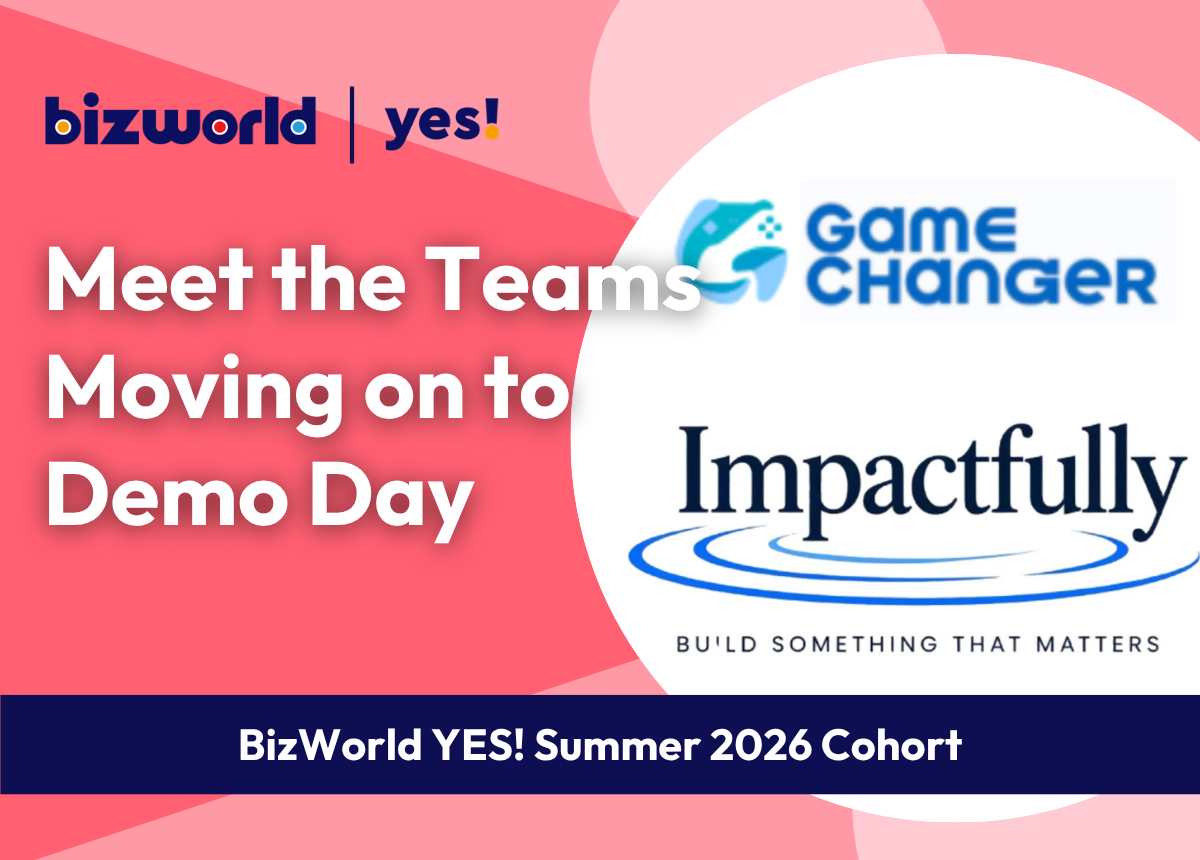
Ten weeks led to one big moment: Pitch Day. The BizWorld Young Entrepreneur Success Program, better known as YES!, is a 10-week remote Business Accelerator for young entrepreneurs ages 16–22 with an innovative idea or early-stage venture. Throughout the program, participants attend weekly workshops, receive one-on-one mentorship, and learn from experienced entrepreneurs and industry professionals. They use those ten weeks to strengthen their business plans, understand their customers, test their ideas, and prepare to present their ventures with confidence. These 10 weeks culminate into one exciting contest for a chance at $30,000; pitch day! How Does YES! Pitch Day Work? At the end of the 10-week program, every team presents its venture to a panel of judges at Pitch Day. Pitch Day is not where the $30,000 of seed funding is awarded, it is the first stage of the selection process. The judges review each team’s venture, business plan, and pitch, before selecting the strongest teams to advance as finalists, to go to the annual YES! Global Demo Day. At Demo Day, the finalists pitch again for the opportunity to receive up to $30,000 in seed funding to help take their ventures forward. For the YES! Summer 2026 Cohort, ten teams stepped forward to present their work, and only two would be selected to advance! Judge Feras Alhlou shared how difficult that decision was: “All of the teams were prepared, thoughtful, and delivered exceptionally well.” Meet the Summer 2026 Finalists (…drum roll please!) Impactfully This change making start-up Impactfully, is an eight-week online mentorship program that helps high school students, as well as selected younger students who demonstrate readiness, identify a meaningful problem in their communities, develop and test a practical solution, and launch an authentic passion project. Through a guided curriculum, weekly accountability, templates, feedback, optional one-on-one guidance, and progress updates for parents, Impactfully gives students the structure to turn something they care about into meaningful action. Impactfully is led by Founder and CEO Emilio Saenz, alongside App Developer Mateo Saenz. GameChanger Founded by Cheren Song, Dominic Ye, Jonathan Ye, and Ifelade Adeleye, GameChanger is a patent-pending modular adaptive controller and companion app created to make gaming more accessible for people with limited hand dexterity, including those living with Parkinson’s, arthritis, or tremors. Its ergonomic, PC-compatible controller uses large, low-force, interchangeable buttons that reduce strain and movement. Through the companion app, users can personalize button functions and joystick sensitivity to create an experience that better suits their individual needs. Congratulations to both teams. We cannot wait to see them take the next step at YES! Global Demo Day, in spring 2027. One More Demo Day Spot Is Still Open For the remaining Summer Cohort entrepreneurs, Pitch Day was not the end. The YES! Wildcard vote will open soon, giving the public the opportunity to directly help one additional company to join Impactfully and GameChanger at Demo Day, to pitch for up to $30,000 in seed funding. Learn more about the BizWorld YES! Program.

Read More »
News & PR
Leane Pottas

From Pharmacy Student to Funded Founder: How Sakhi Patel Built CuraVoice Through BizWorld’s YES! Program

When Sakhi started building CuraVoice at the end of 2024, she wasn’t thinking about paid contracts, joining BizWorld’s YES! Program, or pitching her new MedTech startup at conferences. She was a third-year pharmacy student who had noticed a gap – healthcare schools teach students what to say to patients, but rarely how to say it. That observation became a platform. CuraVoice lets healthcare students practice real patient conversations with a custom AI voice agent, receive graded feedback and build the communication confidence that clinical training often skips. Today, the platform has over 550 users across more than 100 universities worldwide, and a paid workforce training contract with an independent pharmacy. Getting to this point though, required more than a good idea. Finding the Right Room Sakhi heard about BizWorld’s Young Entrepreneur Success (YES!) Program through a LinkedIn post from a previous cohort winner. At 21, she was still learning the language of startups – terms like customer acquisition cost, and lifetime value were new territory – and most accelerators she encountered weren’t built with students in mind. “A lot of big accelerators are not always built with a student in mind,” she explained how BizWorld’s YES! Program is differnt. “Just being in a space where you also see other young people like yourself is really motivating.” What drew her in wasn’t just the curriculum, it was the environment, one where not knowing something wasn’t a liability, and where every participant was just like her, figuring things out in real time. Treated Like a Founder, Not a Student Founder One of the things Sakhi kept coming back to was how BizWorld reframes the idea of a student entrepreneur. There’s an unspoken assumption in many programs that a student led project has an expiration date; that it ends when school does. BizWorld pushes back on that idea. Her mentor made it clear early on: don’t let the momentum stall on your ideas just because you’re still in class. The focus wasn’t on surviving the semester, it was on building something that would still be running in five or ten years. “That’s what differentiates this program,” Sakhi said. “It forces you to think long term.” A Safe Space to Get It Wrong One thing the startup world doesn’t always advertise is how much trial and error actually goes into building something. For young founders especially, that process can feel high-stakes – particularly in rooms full of people with decades more experience. BizWorld is deliberately different. The YES! Program is built around the idea that getting things wrong is part of the process, not a disqualifier. Sakhi described it plainly, “What better place to fail than in a very supportive environment surrounded by other young entrepreneurs that are all just trying?” That culture of a business accelerator program matters more than you realize. It means founders show up willing to test ideas, ask basic questions and change direction without it feeling like a setback. Sakhi herself didn’t expect CuraVoice to pivot into workforce training, that direction emerged through conversations, feedback and the willingness to keep questioning early assumptions. But BizWorld’s support doesn’t stop at encouragement. What makes the program genuinely distinctive is what happens after the final Demo Day pitch event where participants have the chance to take home $30,000 in funding. Winners aren’t handed a cheque and sent on their way, they’re brought back for structured six and twelve-month check-ins to report on how their funding is actually being used. It’s accountability built into the model, and it sends a clear message: this isn’t a school prize, it’s an investment in a real business! “BizWorld wants you to tell them, ‘Hey, in six months I said I would do this, and now I did it,’” Sakhi said. “That’s where treating us like real founders actually comes in.” Demo Day: A Different Kind of Pitch Competition The YES! Program’s pitch even Demo Day, isn’t structured like a typical pitch contest. There’s no fixed first, second or third place winners. Founders make their own funding ask, explain exactly what they’ll use the money for and the judges decide from there. This year, five companies walked away with funding between $2,000 to $10,000. But would you believe it that at first, Sakhi almost didn’t make it to Demo Day at all. Due to the quality of her pitch at the end of the YES Program’s 10-week accelerator, she wasn’t selected in the initial round to proceed to the finals at Demo Day, but a wildcard community vote – which she won – put her back in the room. She went on to deliver a new pitch, answer the judges’ questions with confidence and expertise, and walked away as the top-funded company, taking home $10,000. “I was not counting on being the absolute winner,” she said. “Seeing people really rally for me was good enough in and of itself.” So what will this new found investment be sued for? The funds are going toward cloud infrastructure to support CuraVoice’s growing data needs, conference attendance to reach pharmacy owners and hiring managers, and a targeted marketing push. BizWorld also builds in six and twelve-month check-ins to hold winners accountable – another signal that this is real investment, not a prize cheque. What’s Next for CuraVoice CuraVoice is expanding beyond the student market into workforce training, giving employers a credentialing layer to assess how well candidates can actually communicate with patients, not just what they know on paper. It’s a pivot that came directly from conversations at a pharmacy conference, where owners and hiring managers asked for exactly that tool. For Sakhi, the BizWorld experience didn’t end at Demo Day. The connections, mentorship and community have continued, which she says is exactly what young entrepreneurs need most. “There are spaces where you will feel supported,” she said. “but if you don’t try, you’ll never find them.” Support the Next Generation of Founders Many people are often surprised by the fact that the YES! Business Accelerator program is free

Read More »
Educational Blog
Leane Pottas

Uncovering Santa’s Secret: How BizWorld Helped Shape a Legend

Every Christmas Eve, children around the world wait for a familiar bit of magic: the soft jingle of bells, a flash of red in the sky, the wonder of waking up to gifts that seem to appear out of nowhere. Santa Claus is a global icon – a master of logistics, leadership, innovation, and joy. But here’s the secret no one knows: Santa didn’t become Santa by accident.He became Santa because he was once a BizWorld kid. Yes, long before the sleigh upgrades and worldwide distribution systems, a young, imaginative North Pole boy participated in the BizWorld programs, and everything changed. BizWorld+: Where Santa Learned to Lead As a child, Santa was creative but chaotic. His workshop ideas were brilliant… but his management skills? Let’s just say the elves still laugh about it. Through BizWorld+, Santa learned what it takes to run a company from the ground up. He practiced leadership, teamwork, and critical thinking-skills he now uses to manage the world’s most efficient holiday operation. Teachers often say BizWorld+ prepares students for real-world decision making. Santa would simply say: “BizWorld+ showed me what I never thought possible; that I can turn my magic into an actual business.” id8: Where Santa Became an Inventor Every iconic Santa innovation, the flying sleigh, the toy-sorting conveyor belt, the Naughty-or-Nice algorithm – all began with the mindset he built in id8. Using design thinking and engineering principles, the id8 program taught young St. Nick how to: The elves swear that id8 is where Santa first sketched the early blueprint of the “Gift Delivery Tracker”, now known by children world-wide as the Santa Tracker. Impact Challenge: Where Santa Found His Purpose One snowy winter, Santa’s 5th grade class started the Impact Challenge, where students create solutions that help their communities. And what was Santa’s project? A plan to ensure every child, not just the ones nearby, could experience moments of joy, hope, and wonder. The Impact Challenge program didn’t just refine Santa’s leadership, it gave him his mission. “Joy is not a product,” he realized. “It’s my mission.” Today, that mission fuels everything he does. YES! Program: Where Santa Became a Founder If people think Santa’s workshop simply appeared out of thin air, they’re missing the origin story. As a teen, when the North Pole and all it’s wonder was still simply an idea, Santa joined the YES! Business Accelerator Program, which empowers young entrepreneurs to turn ideas into real businesses.  YES! gives young founders real mentorship, business planning support, and seed funding opportunities. The same program that’s helped launch over 120 youth-led businesses around the world launch and grow, helped Santa to refine: The young entrepreneurs from the YES! program have generated millions of dollars in revenue, and Santa? Well… let’s just say his ROI is measured in smiles. So What Was The Real Secret Behind Santa’s Success? When you look at Santa now, the smooth global deliveries, the happy kids, the nonstop innovation at the North Pole, it’s easy to think it all came from magic. But it didn’t. It came from learning. All the skills Santa uses today: teamwork, problem-solving, creativity, leadership, financial literacy, and caring about others, started as little sparks inside a BizWorld kid. Those sparks grew into the legend we know today. In the end, Santa didn’t just become Santa. He was shaped, step by step, by the same tools and programs that help thousands of students grow every year. A North Pole Secret Just for You Santa asked us to share one final thought just for you: “Any educator who brings BizWorld into their classroom and any donor who supports this mission is automatically added to my Nice List.” And for BizWorld students? Well, Santa insists innovation deserves rewards.  Every BizWorld kid gains gifts that last a lifetime – confidence, creativity, leadership, teamwork, and problem-solving; all essential life skills supported in BizWorld’s mission to help youth unlock their potential and create opportunity. Want to Be a Legend Like Santa?  Give your students the same tools that shaped the world’s most iconic entrepreneur. 👉 Explore BizWorld+, id8, Impact Challenge, and the YES! Program today. Become part of the magic – help shape the next generation of leaders, and yes… earn your place on the Nice List. *Disclaimer: This story may contain traces of imagination, elves, and mild North Pole exaggerations. Santa did not actually attend BizWorld (as far as we know). But the magic of entrepreneurial learning? That part is 100% real.

Read More »
Students participating in BizWorld’s entrepreneurship and STEAM program, showcasing projects that inspire creativity, teamwork, and innovation for National Entrepreneurs Day.
education
Wayne Veldsman

From STEAM Projects to Startups: How Entrepreneurship Education Creates Young Innovators

National Entrepreneurs Day: Celebrating Curiosity and Creativity Every great entrepreneur starts with a question – a single “What if?” “What if I could solve this problem?” “What if my idea actually worked?” “What if I could make a difference?” That same curiosity lives in today’s classrooms. On National Entrepreneurs Day, November 18th, 2025, we celebrate not only the dreamers and innovators who are building businesses, but also the educators who light that spark of creativity in the next generation. At BizWorld, we believe entrepreneurship doesn’t begin in a boardroom. It begins in a STEAM-powered classroom where students explore, experiment, and discover how their ideas can shape the world. What Does Entrepreneurship Have to Do with STEAM? STEAM – Science, Technology, Engineering, Arts, and Math – teaches students how to think critically, collaborate, and create. But more than that, it teaches them how to turn ideas into impact. When a student codes a prototype, designs a product, or tests a hypothesis, they’re doing what every entrepreneur does: identifying problems, building solutions, and learning from failure.  This way of thinking lies at the heart of both the entrepreneurial mindset and the STEAM approach; it’s what defines entrepreneurs, and it’s what STEAM education seeks to develop. In this way, STEAM and entrepreneurship education share the same DNA. Both encourage curiosity, creativity, and courage; the durable life skills every student needs to thrive in the future of work. Why STEAM + Entrepreneurship Is the Perfect Combination Educators know that real learning happens when students can connect lessons to life. That’s why entrepreneurship education is one of the most effective forms of STEAM learning; it’s project-based, student-led, and rooted in real-world problem solving. Through entrepreneurship: This isn’t about teaching business for business’s sake. It’s about helping students gain life skills of confidence, empathy, and persistence, the durable skills that stay with them forever. How BizWorld Brings STEAM to Life in Classrooms Across the globe, educators use BizWorld programs to make STEAM and entrepreneurship come alive for their students. Each program in our 4 stage trajectory of learning builds essential skills in creativity, leadership, and problem-solving, all while making learning fun and engaging. BizWorld+ BizWorld+ transforms the classroom into a real-world startup simulation, giving elementary and middle school students the opportunity to experience what it takes to launch and run a business. Working collaboratively, they form companies, take on leadership roles, and guide their teams through the process of designing, manufacturing, marketing, and selling a product. Along the way, they learn to budget, design, and pitch their ideas, integrating STEAM concepts through collaboration, creativity, and critical thinking. ID8 ID8 is a STEAM-focused program that brings technology and innovation to life through a challenge-based simulation. Students work in teams to develop app-based solutions to real-world problems, creating wireframes and mock-ups that showcase their ideas. As they explore user experience, coding concepts, and design thinking, they connect creativity with technology—just like real startup teams do. Impact Challenge Impact Challenge empowers students to become social entrepreneurs, creating real businesses that make a difference. Working in teams, they design and produce products, sell them for a profit, and donate their earnings to a charitable cause of their choice. Along the way, students develop creative ideas for products and solutions while applying financial literacy, ethics, and empathy, integrating STEAM concepts as they discover how entrepreneurship can drive meaningful change. Each BizWorld program is created to be easy for teachers to implement, flexible for different grade levels, and built to support STEAM standards and social-emotional learning (SEL) outcomes. From the Classroom to the Real World: The YES! Accelerator – The Final Stage in the BizWorld Trajectory For students ready to take their ideas beyond the classroom, BizWorld’s YES! (Young Entrepreneur Success) Business Accelerator Program is the final step. This 12-week online accelerator for youth ages 16–22 connects aspiring founders with experienced mentors and business professionals. Young entrepreneurs learn how to refine their business models, develop marketing strategies, and pitch to real investors, all free of charge to them. The results speak for themselves: What’s the thread between these success stories and the many others that have come from the YES! Program? Each success story began with curiosity, and grew through the mentorship and mindset BizWorld provides. Educators: The True Investors in Innovation Behind every confident young entrepreneur is an educator who made space for curiosity. When teachers introduce entrepreneurship through programs like BizWorld+, id8, and Impact Challenge, they’re not just teaching business, they’re guiding students to think critically, collaborate effectively, and solve problems creatively. “This is what school should be like all the time!” — Meg Anderson, 4th Grade Teacher “Students who were shy came out of their shells and discovered their strengths.” — Brian Rinderknecht, 5th Grade Teacher“The transformation of students in the BizWorld Program is real. Even quiet students found their voices through the BizWorld programs.” — Carolyn Tatem, Elementary School Teacher BizWorld’s trajectory of programs gives educators the tools to turn creativity into confidence, helping students apply what they learn in the classroom to real-world challenges and lifelong success and access to pursue their dreams. Most importantly, they showcase how building an entrepreneurial mindset equips students with skills that will carry them into successful futures, regardless of the careers they ultimately pursue. What Does Celebrating National Entrepreneurs Day Really Mean? It’s about celebrating the partnership between educators, mentors, and young innovators who turn imagination into impact. When STEAM and entrepreneurship meet, students don’t just learn skills – they discover possibility. And thanks to the YES! program, they have the mentorship and resources to bring those possibilities to life. This National Entrepreneurs Day, let’s continue building classrooms where creativity feels possible, innovation feels accessible, and every “what if?” finds its “how.” For Educators It’s up to you to empower your students to think boldly, act creatively, and collaborate fearlessly. Bring entrepreneurship education to life with BizWorld’s classroom programs. 👉 Explore the BizWorld Programs For Young Innovators Do you have an idea that won’t leave your mind? The Young Entrepreneur

Read More »
education
Melissa Doppler

How Crowdfunding Works

A Guide for Student Entrepreneurs Starting a new business is exciting—but it can also be expensive! What if you have a cool idea for a product or service, but you don’t have the money to make it happen? That’s where crowdfunding comes in. It’s a way to raise money from a lot of people—usually online—to help get your business off the ground. Let’s break it down. What Is Crowdfunding? Imagine you have a great idea to design custom phone cases that reflect your school spirit. You need $500 to buy materials and start making them. Instead of asking one person (like your parents or a bank) for the full amount, you ask 100 people to each donate $5. That’s crowdfunding! Crowdfunding is when lots of people pitch in small amounts of money to help fund a project, business, or product. In return, they might get rewards, early access, or just the satisfaction of supporting a great idea. Examples 1. The Snack Shack A group of 8th graders wants to open a healthy snack stand at school. They need $300 to buy ingredients and supplies. They launch a crowdfunding campaign offering: They raise $500 and open “The Snack Shack” in the school courtyard! 2. The Eco-Friendly Hoodie A high school student designs a hoodie made from recycled materials. She starts a crowdfunding campaign to raise $1,000 to produce the first 50 hoodies. Backers who donate: Her campaign goes viral, and she raises $2,000—enough to start her own clothing brand! Why use Crowdfunding? Why? Because prototyping is about ideas, not appearances. Using simple materials helps you stay focused on the function, not just the form. Ready to Try it? If you’re a young entrepreneur, crowdfunding can help you turn your big ideas into reality. Start small, be clear about your goals, and always thank your supporters. You never know—your school project today could become the next big thing tomorrow!

Read More »
education
Melissa Doppler

What is a Prototype?

The Art of Building Big Ideas with Small Stuff Have you ever had a genius idea pop into your head—maybe for a cool new product, a helpful invention, or even an app—and thought, “Someone should make this!” Well, that someone could be you. But before anyone mass-produces the next big thing, every idea starts in a simple, scrappy, hands-on way. That’s where a prototype comes in. What Is a Prototype? A prototype is a rough, early version of your idea. Think of it as a 3D sketch—a first draft of your invention. It helps you test out how your idea might actually work in real life. It doesn’t have to be perfect (in fact, it shouldn’t be). It just needs to show your idea and solve the problem you’re trying to address. You’re not building the final product—you’re building a model to explore, improve, and share your concept. Prototyping Is an Art Prototyping isn’t just engineering or science. It’s also creativity, design, storytelling, and resourcefulness. The best prototypes don’t always come from fancy kits or high-end tools—they come from students like you using what’s already around them. Use What You’ve Got: Found & Recycled Materials You don’t need to drop money on supplies to build something awesome. Some of the most effective prototypes are made from found or recycled materials. Look around your home or classroom for: Why? Because prototyping is about ideas, not appearances. Using simple materials helps you stay focused on the function, not just the form. Start with a Plan: Draw and Label FirstStudent Entrepreneurs Before you start cutting, gluing, or taping things together, grab a pencil and paper. Sketch out your design. Label the parts. Show how it works. Think through questions like: Having a labeled drawing is like having a roadmap—it helps you organize your thinking and avoid wasting time (or tape!). Bonus: Your sketch is also useful when you need to explain your idea to others—whether it’s your teammates, your teacher, or potential “investors” (hello, Shark Tank moment!). Build. Test. Improve. Repeat. Once your prototype is built, test it out. Does it work the way you imagined? What could be improved? Prototyping is all about trial and error—failing fast and learning fast. Most inventors go through lots of versions before they land on the one that works best. That’s the art of prototyping—being okay with imperfections and seeing every attempt as progress. Final thoughts Prototyping is where your ideas come to life. It’s messy, fun, creative, and full of surprises. Don’t wait until you have the “perfect” materials or know exactly what you’re doing—start where you are, with what you have. Because the next great innovation might just be hiding in your recycling bin. Want to see how the pros do it? Start paying attention to product design videos, DIY inventors on social media, or even makers on YouTube. You’ll be surprised at how often a big idea starts with scissors, cardboard, and tape. Now go turn your idea into something real!

Read More »
education
Melissa Doppler

From Bracelets to Business Plans: Launching Student Entrepreneurs with BizWorld+

One of the most powerful ways to teach students about entrepreneurship is by giving them the chance to step into the role of entrepreneurs themselves. Through the BizWorld+ program, educators across grade levels are finding creative ways to bring the world of business to life in their classrooms. From simple crafts in elementary school to sophisticated products in upper-level electives, BizWorld+ provides a flexible framework that empowers students to create, collaborate, and think like CEOs. Starting Simple: Friendship Bracelets in the Elementary Classroom When a teacher introduces the BizWorld+ unit for the first time in an elementary classroom, one of the easiest and most engaging product choices is the classic friendship bracelet. String bracelets are simple to make, require minimal setup, and are beloved by students. They provide a clear, hands-on way to teach essential business concepts like budgeting, production, marketing, and sales. Teachers often begin with bracelets because: They build confidence – Even students who don’t see themselves as “creative” can participate and succeed. This accessible start allows the teacher to focus more on teaching the process of entrepreneurship: forming companies, assigning roles, designing marketing strategies, and managing money. Leveling Up: Designing Unique Products in Future Units Once teachers are comfortable with the BizWorld+ process, the door opens to more creativity. In future BizWorld+ experiences, teachers often invite students to design their own products using readily available classroom STEAM and craft materials. This allows for cross-curricular integration and gives students ownership over their ideas. For example, students might: These more advanced and personalized projects challenge students to think not just about making a product, but about innovation, branding, and meeting customer needs. Teachers can link this to design thinking, encouraging students to prototype, test, and refine their ideas before going to market. Advanced Applications: Tapping into Secondary Curriculum In middle and high school, BizWorld+ units can be embedded into subject-specific courses, with product ideas drawn directly from the curriculum. Culinary Arts Class Students can bake cookies or cupcakes to sell at school events. They’ll calculate cost per item, consider packaging and dietary needs, and even survey peers to determine which flavors will be most popular. Creative Writing Class Writers can compile their original stories, essays, or poems into a self-published book. They’ll need to think about layout, cover design, pricing, and promotional strategy—real-world publishing experience for young authors. Photography Class Students can offer portrait sessions, yearbook shots, or photo booth services at school events. They’ll manage bookings, edit images, and create promotional flyers and digital content. History Class Students might create historical board games or trivia card sets featuring key events, figures, or movements. They could also produce illustrated timelines or “historical hero” trading cards to sell—turning research and storytelling into products with educational value. Advanced Math Class Math students could design logic puzzle books, brain teaser kits, or math-themed board games. Alternatively, they might offer tutoring services to younger students, creating a service-based business that reinforces their own skills while helping others. Empowering Student Entrepreneurs No matter the subject, BizWorld+ gives students a platform to apply academic knowledge in meaningful, entrepreneurial ways. When students create and sell something of their own, they learn more than just business skills—they learn to collaborate, problem-solve, take risks, and believe in their ideas. Whether it begins with a simple friendship bracelet or grows into a full-fledged student-run publishing company, BizWorld+ makes learning real—and unforgettable. And once students have identified and created their product or service, they take the critical next step of developing a business plan. This plan becomes their roadmap, guiding them from production through to sales. It helps them organize their ideas, anticipate challenges, and make thoughtful decisions about marketing, budgeting, and operations. By putting their vision into writing, students not only prepare to run their businesses successfully but also gain a deeper appreciation for the planning and strategy that real-world entrepreneurs rely on every day. Ready to spark the next generation of innovators? Bring BizWorld+ into your classroom and watch your students turn their big ideas into real businesses.

Read More »
YES! Alumni Success Stories blog cover showing young entrepreneurs and their journey of building impactful businesses through the BizWorld YES! Program.
Case Studies
Wayne Veldsman

YES! Alumni Success Stories: How Young Entrepreneurs Are Building Businesses That Matter

What does it really take to start a business as a young person? For many, the thought feels impossible – too little experience, too few resources, and no access to funding. But for graduates of BizWorld’s Young Entrepreneur Success (YES!) Program, those same obstacles become the foundation of their journey. YES! provides mentorship, training, and seed funding, equipping young people with the tools they need to turn ideas into entrepreneurial ventures that make a difference. What follows are the stories of alumni who prove that with the right support, youth entrepreneurship doesn’t just work – it thrives. Joe Knopp – Ripple (Summer 2022 YES! Cohort) When most young people wonder how to start a business, Joe Knopp went ahead and did it. During the Summer 2022 YES! cohort, he launched Ripple, a unique water bottle company with a powerful mission: every purchase funds clean water projects in Africa. What began as a student startup is now a growing social venture expanding its reach and impact worldwide (see Ripple communities). By Demo Day, Joe had not only secured $8,000 in funding to scale his venture, but also positioned his startup for a successful exit shortly after the program. The mentorship gave him the structure to refine his business model and prepare for profitability. “I used that funding to reduce my costs and sharpen the business model” – Joe Knopp Joe’s story proves that youth entrepreneurship can do more than generate revenue – it can create lasting social change. Jonathan Graham & Ben Ward – StudyStash (2024 UK–UAE Cohort) For Jonathan Graham and Ben Ward, the challenge wasn’t just how to start a business as students – it was how to build one that could scale across continents. Together, Ben and Jonathan launched StudyStash, an edtech startup using neuroscience and adaptive AI to help students learn faster. YES! came at a pivotal moment for StudyStash. The program pushed them to look beyond product development and embrace the realities of running a business: finance, strategy, and pitching. With weekly accountability and mentorship, including guidance from a former Alphabet executive, they gained the clarity and confidence to scale. Since winning funding at Demo Day 2024, they’ve launched pilots with universities in Texas, the UK, and Amsterdam, and closed upwards of $500,000 toward their first investment round thanks to introductions and opportunities presented by BizWorld. “YES! gave us structure beyond product building. It pushed us to think bigger than the UK and sharpen our pitch for global opportunities.” – Jonathan Graham Jonathan and Ben’s journey is proof that with the right entrepreneurial training and support, student founders can compete on a global stage. Vienna Sparks & Skye Lam – MabLab (Winter 2024 YES! Cohort) Some founders chase profit. Others chase purpose. For Vienna and Skye, it was the latter. During the Winter 2024 cohort, they created MabLab, a venture aimed at fighting the dangers of adulterated and laced drugs – a public health crisis claiming countless lives. At Demo Day, they secured first-place, $15,000 in BizWorld seed funding and the attention of industry leaders who believed in their mission. “YES! gave us the resources and mentorship to take our idea seriously and prove it could save lives.” – Vienna Sparks Their journey highlights how programs that provide funding for young entrepreneurs don’t just spark startups, they help launch solutions that matter to entire communities (and potentially the entire world). Dylan Kong, David Choe & Nishant Saravanan – SanoSyn (Summer 2025 YES! Cohort) For Dylan, David, and Nishant, entrepreneurship meant solving a challenge no textbook had ever prepared them for: the lack of access to safe anesthesia in underserved regions. Through YES!, they co-founded SanoSyn, a portable anesthesia system designed for communities without advanced medical infrastructure. With expert mentorship, they transformed their early prototype into a viable solution and secured a spot as Pitch Day Finalists, moving on to Demo Day to pitch for up to $30,000 in funding. “The relationships we built with our mentors and peers really helped us to refine our pitch which is what specifically accelerated our idea.” – Dylan Kong SanoSyn’s story shows the power of a youth entrepreneurship accelerator, paired with mentorship, and a community of like-minded individuals. The Bigger Picture: YES! Alumni Impact Across these stories: Joe’s profitable exit, Jonathan and Ben’s global expansion, Vienna and Skye’s mission-driven startup, and Dylan’s healthcare breakthrough, a clear picture emerges: At the core of each success is a young person who once asked themselves, “Can I really start a business at my age?” Today, they’re living proof that the answer is, “YES! I can.” These stories aren’t just about business – they’re about confidence, resilience, and community. They highlight what happens when young people are given mentorship and access to pursue their dreams. Most importantly, they showcase how building an entrepreneurial mindset equips YES! alumni with skills that will carry them into successful futures, regardless of the careers they ultimately pursue. Ready to Launch Your Idea? If you’re between 16–22 and have a business idea – whether it’s just forming, already launched, or ready to scale, the YES! Program is for you. 👉 Apply to the YES! Program Winter Cohort Thanks to the generosity of BizWorld’s donors, YES! is free for all participants. That means every young entrepreneur, regardless of their background, can access world-class mentorship, the potential for seed funding, and a life-changing community. Don’t wait – apply today and take the first step toward turning your idea into a venture that makes a difference. A Call for Support Did you find the stories in this blog article inspiring? Well, they would not be possible without the support from our amazing community (people like you). From offering time and expertise to providing seed funding, your contribution shapes stories like Joe’s, Jonathan’s, Vienna’s, and Dylan’s. Please help us and support youth entrepreneurship – whether it be through mentorship, a donation, or being an advocate for our mission, your help will directly fuel the next YES! success story. “As a first-generation, lower-income

Read More »
National Make a Difference Day Blog Cover at BizWorld.org
Educational Blog
Wayne Veldsman

Inspiring Youth to Lead with Purpose on National Make a Difference Day

Every year on the fourth Saturday in October, communities across the United States unite for National Make a Difference Day, a nationwide celebration of service and kindness. From neighborhood clean-ups to local food drives, people of all ages step forward to create meaningful change. It’s a reminder that when we work together, small actions can add up to big impact. While this day shines a spotlight on community service, it also highlights an important truth: making a difference isn’t limited to one day. It’s a mindset that can be nurtured in people young and old, giving them the tools and confidence to positively impact the world around them. Can Youth Entrepreneurship also be Community Service? One powerful and perhaps surprising way that students are making a difference is through entrepreneurship. When young people build businesses with a purpose, they aren’t just learning financial literacy and leadership, they’re practicing service, innovation, and problem-solving that directly benefits their communities. For example, BizWorld’s Impact Challenge encourages students to design businesses that generate both revenue and social good. These classroom ventures are built to donate profits to charitable causes, address local challenges, or raise awareness about issues that matter most to the students. It’s entrepreneurship, but with a heart for service. When we teach the leaders of tomorrow the importance of making a difference, they grow into adults that are focused more on impact, rather than simply profit. Student Stories: Youth Start-Ups Making a Difference Some powerful examples of service, innovation and making a difference, come straight from BizWorld’s YES! youth entrepreneurs. Take MabLab, a 2023 YES! start-up, co-founded by Skye Lam and Vienna Sparks. Their company is developing a 5-in-1 rapid drug test to detect lethal contaminants in recreational drugs, a solution designed to address a pressing public health challenge.  “What sets MabLab apart is not just their innovative technology, but their commitment to addressing a critical yet often overlooked public health crisis. The founders are passionate about decreasing the danger surrounding drugs, particularly in marginalized communities that are frequently overlooked by startups and investors.” – BizWorld Staff Member Another exciting young entrepreneur change-maker is Titilope Olotu, a third-year biology student at UCLA and a Nigerian immigrant who founded PADI and its nonprofit arm, PADI for You, a company with a mission woven into its core. Her business began by addressing the lack of access to safe menstrual products back home in Nigeria, ensuring that girls and women had the sanitary care they deserve. “Healthcare is becoming more inaccessible. We wanted to provide a resource, especially for young girls, so they can understand what’s going on with their bodies, early.” – Titi MabLab and PADI are just two examples of how young entrepreneurs transform ideas into meaningful impact. Their stories remind us that with mentorship, resources, and encouragement, youth find creative ways to serve their communities. How Volunteering Multiplies Into Big Impact At its core, National Make A Difference Day is a celebration of volunteering. From helping at a food pantry to cleaning up a local park, volunteers remind us that positive change begins with everyday people choosing to give their time, energy, and care. These contributions may feel small in the moment, but together they build stronger, healthier, and more connected communities. One of the most powerful and perhaps unexpected ways to volunteer is through mentorship. Mentoring a young person doesn’t just make a difference in their life today; it gives them tools, confidence, and perspective they’ll carry into every future decision. And when that young person happens to be an entrepreneur, the ripple effect is even greater. A single piece of guidance can shape a business that impacts hundreds, even thousands, of people. “We owe it to help young minds to be steered in the right direction. So many have belief in an opportunity but may not have the resources or access, and that’s where mentors can change everything,” said Jay Allardyce, BizWorld Mentor and Board Member. “Mentorship gives them confidence, resources, and a network. Things every young person needs to keep going.” That’s what makes mentorship such a meaningful form of volunteering: it blends the personal with the global. You’re helping a young leader grow, while at the same time investing in the ideas and innovations that can uplift entire communities. Carrying the Spirit of Making a Difference, Beyond the Day National Make a Difference Day is one day on the calendar, but its message is timeless: every act of service has the power to spark change. Whether it’s a volunteer lending a hand, a mentor guiding a young entrepreneur, or a student turning an idea into a business that serves their community, these actions ripple far beyond the moment. What matters most is the spirit behind them, the belief that we each have something to contribute, and that when we do, our efforts add up to something greater than ourselves. So as we celebrate this day, let’s also carry its energy forward. Let’s keep asking, “Where can I lend my time, my knowledge, or my resources?” Because making a difference doesn’t have to be something big or extraordinary; we just have to start. Sign up to Mentor a young entrepreneur in the YES! Program and start a ripple effect that will last a lifetime. Learn more about Volunteering with BizWorld.

Read More »
education
Melissa Doppler

Fun and Simple Product Ideas For Junior Entrepreneurs

Looking for some fun and simple products kids who aspire to become junior entrepreneurs can make at home or in the classroom?  Here are some inexpensive and easy-to-make product ideas using readily available craft materials that anyone can create! Bookmarks Rings / Keyrings / Keychains Decorated / Painted Pebbles Stuff Animals Additional Resources & Patterns Have another product idea to add? We’d love to hear from you! Email us at program@bizworld.org Learn more about BizWorld – get started with BizWorld+ today.

Read More »

Cryptocurrency

We’re proud to accept donations of cryptocurrencies via our partnership with Every.org. You may please donate directly through our donation portal here.

Stock Transfer

For information about electronic transfers or to donate stock or appreciated securities please send us a message here now.

Donor Advised Fund

Making a donation through your Donor-Advised Fund is simple and impactful!

How to Give:

  1. Directly through DAF Direct: If your DAF sponsor is supported, use their portal to make your gift directly.
  2. Mail or Wire: Direct your DAF sponsor to send a check or wire funds to:
    BizWorld Foundation
    Tax ID: 94-3280297
    Address: 55 East 3rd Ave, San Mateo, CA, 94401
    EIN # 94-3280297

Helpful Tips:

  • Use our tax ID (94-3280297) when searching for BizWorld Foundation in your DAF sponsor’s directory to ensure your donation is correctly processed.
  • If your DAF is with Fidelity Charitable, Schwab Charitable, or BNY Mellon, you can use their portal for easy gifting.
  • You may designate your gift for a specific program or initiative in the “designation” field if your DAF sponsor allows.

Thank you for supporting BizWorld Foundation and helping us equip young entrepreneurs to unlock their potential!

ACH or Wire

Please  submit a contact form now  for information about electronic transfers or to donate stock or appreciated securities.

Mail Check

You can mail a check made payable to BizWorld.org to:

BizWorld.org

55 East 3rd Ave, San Mateo, CA, 94401.